Grid view 모든 카테고리Theatre of Return 20260927극장에 대한 생각 / Thoughts on the Theater 극장은 무대와 공연자 그리고 관객으로 이루어져 있다고들 한다. 나의 무대에 대한 관심은 ‘로케이션'(2006년) 사진 연작 때부터였다. 나는 엘비스 프레슬리의 곡 ‘아유 론 섬 투나잇’의 가사에서 “누군가 말하길 세상은 무대고 우리는 각자 역할을 연기하지….” 라는 대목을 좋아한다. 무대 경험을 위해 2008년 연출가 수르야와 함께 대학로 소극장에서 연극 “몬스터”의 무대미술을 맡아 보기도 했다. 이듬해 2009년에는 “씨네메지션” 공연을 CREAM 페스티벌의 일환으로 요코하마 미술관에서, 이어서 뉴욕 ‘퍼포마09’의 초대로 아시아 센터에서 공연했다. ‘씨네메지션’에서는 마술사가 무대 위를 시종일관 다니며 바꾸어 놓는 소도구들의 모습이 무대 앞 카메라에서 비친 스크린 화면에서는 전혀 다른 풍경을 자아내는 구성의 공연이다. 극장은 무대 위에서 객석이 있는 한쪽 방향으로만 정교하게 보이는 세트, 조명, 연기자와 연출, 그리고 이를 반대 방향에서 바라보는 관객들의 즉각적 반응이 합쳐지는 공간이다. 현대 미술이 미술관에서 보일 때와는 달리, 무대와 객석이라는 구조 속에서 관객과 가지는 ‘즉석 만남’은 다른 층위의 소통을 가능하게 한다. 예술가로서 무대 위에서 관객의 반응을 예측하는 행위는 여러 해석과 의미의 층위 중 가장 윗부분에 있으며, 반복 재생이 불가능한 찰나를 다루는 매력을 가진다. 휘발성이 대단히 강하지만 동시에 자극적이다. DMZ 극장(2021)에서는 전시장 여기저기에 놓인 여러 개의 작은 팔레트들을 무대로 삼아 배우와 관객들이 함께 공간을 돌아다니며 공연하는 실험을 했다. 제주도 한경면 산양리의 옛 초등학교 교실에서 지역 주민들을 모시고 공연했던 ‘백 년 여행이 프롤로그'(2022)에서는 무대의 크기를 미니어처 크기로 줄였다. 그 결과 혼자서도 무대의 모든 구성 요소들을 하나씩 만져 가며 구성할 수 있었다. 작은 도르래에 와이어를 걸어 수동으로 오르내리는 바턴, 컨트롤러로 디밍이 되는 미니어처 무대조명과 배경 막, 세트, 작은 무대마루 위를 손가락으로 걸어 다니며 의인화된 배우의 손연기 등, 모든 요소를 혼자 다듬을 수 있는 규모로 하나씩 만들어 보았다. 고려극장을 방문하면서 나는 그동안 가지고 있던 극장에 대한 애착이 이를 구성하고 있는 요소 하나하나에 있었다는 사실을 새삼 깨닫게 되었다. 그리고 다국어 공연 자막을 위해 설치한 좌우 대형 모니터 패널은 나에게 고려극장만의 특수한 상황을 잘 드러내는 상징이라고 생각했다. It is often said that a theater consists of a stage, performers, and an audience. My interest in the stage dates back to my photographic series “Location” (2006). I particularly like the line from Elvis Presley’s song “Are You Lonely Tonight?” that goes, “Someone said the world is a stage, and we each must play our parts…” To gain stage experience, I worked as the set designer for the play *Monster* at a small theater in Daehak-ro in 2008, collaborating with director Surya. The following year, in 2009, I presented the performance *Cinemagician* at the Yokohama Museum of Art as part of the CREAM Festival, and subsequently performed at the Asia Center in New York at the invitation of *Performa ’09*. “Cinemagician” is a performance in which a magician moves continuously across the stage, transforming props that, when captured by a camera at the front of the stage and projected onto a screen, create an entirely different landscape. The theater is a space where the meticulously crafted set, lighting, actors, and direction—all visible only from the audience’s perspective—combine with the immediate reactions of the audience viewing from the opposite direction. Unlike when contemporary art is displayed in a museum, the “spontaneous encounter” with the audience within the structure of the stage and audience seating enables a different level of communication. As an artist, the act of anticipating the audience’s reaction on stage sits at the very top of the layers of interpretation and meaning, and holds the allure of dealing with a fleeting moment that cannot be repeated. It is highly ephemeral yet simultaneously stimulating. In *DMZ Theater* (2021), I conducted an experiment in which actors and audience members moved around the space together, using several small pallets placed throughout the exhibition hall as a stage. In * * One Hundred-Years of Travels – Prologue* (2022), performed for local residents in a former elementary school classroom in Sanyang-ri, Hankyeong-myeon, Jeju Island, I scaled the stage down to miniature size. As a result, I was able to assemble every element of the stage one by one on my own. I crafted each component individually on a scale that allowed me to refine everything myself: a baton that rises and falls manually via a wire attached to a small pulley; miniature stage lights and backdrops that dimmed via a controller; the set; and the hand gestures of an anthropomorphized actor walking across the small stage floor with fingers. Visiting the Goryeo Theater, I realized anew that my long-held affection for the theater stemmed from each and every element that made it up. Furthermore, I came to see the large monitor panels installed on either side for multilingual performance subtitles as a symbol that perfectly captured the unique circumstances of the Goryeo Theater. 20260620이도령 전문 배우 김진의 대사 / Kim Jin’s Lines as Lee Do-ryeong 알마티 시내 공동묘지에 있는 김진 배우의 묘지를 다녀왔다. 1962년 1대 춘향을 연기했던 이함덕 배우와 함께 카자흐스탄 공화국에서 예술가에게 부여하는 최고 영예인 ‘인민배우’ 칭호를 고려인 최초로 받은 분이다. 고려극장의 1대 이도령 역할을 맡은 ‘이도령 전문 배우’답게 그의 묘역에는 백색 타일로 한 글자씩 ‘춘향전’의 한 대사가 새겨져 있다. 이도령이 가족을 따라 한양으로 떠나기 전 마지막으로 춘향을 만나서 이별을 고하는 대목이다. 저승으로 떠나는 배우가 남길 수 있는 멋진 대사인 동시에 멀리 떠나온 이주자의 심정이 겹쳐 보인다. “내. 가. 가. 면. 아. 주. 가. 며. 아. 주. 간. 들. 잊. 을. 소. 냐” I visited the grave of actor Kim Jin at the public cemetery in downtown Almaty. Along with actor Lee Ham-deok, who played the first-ever Chunhyang in 1962, he was the first person of Korean descent to receive the title of “People’s Actor”—the highest honor bestowed upon artists in the Republic of Kazakhstan. True to his reputation as a “specialist in the role of Lee Do-ryeong”—having played the first-ever Lee Do-ryeong at the Koryo Theater—his grave is inscribed with a line from *The Tale of Chunhyang*, each character carved into a white tile. It is the scene where Lee Do-ryeong meets Chunhyang one last time to bid her farewell before leaving for Hanyang with his family. It is a beautiful line that an actor departing for the afterlife could leave behind, and it also seems to reflect the feelings of an immigrant who has traveled far from home. “If. I. go. away. Will. you. really. forget. me. after. I’ve. been. gone. for. so. long?” 20260619우슈토베의 텃밭 /The Vegetable Garden in Ushtobe 건조하고 척박한 땅에서 식물을 키우는 방법. 적은 양의 물로도 식물이 자랄 수 있게 물이 새어 나가지 않도록 오랫동안 가둘 수 있는 형태는 나선형 모양이다. 보통 높게 흙을 쌓아 올린 이랑에 식물을 심고, 고랑을 두어 물 빠짐을 좋게 만들지만, 우슈토베는 반대로 고랑에 식물을 심고 이랑으로 물을 가둔다. 텃밭계의 대지예술 ‘로버트 스미스슨’. How to grow plants in dry, barren soil. A spiral shape is ideal for retaining water for long periods and preventing it from seeping away, allowing plants to grow even with minimal water. Typically, plants are planted in raised ridges of soil, with furrows created to improve drainage; however, in Ushtobe, the opposite is done: plants are planted in the furrows, and water is retained by the ridges. It’s like “Robert Smithson” meets vegetable gardening. 20260619종착역과 태장춘의 묘 / The Final Stop and Taejangchun’s Tomb 일부러 밤 기차를 타고 우슈토베로 향했다. 그곳은 강제 이주를 당한 고려인들이 실려 온 기차의 종착역이었다. 고려극장의 초기 배우이자 연출가였던 태장춘의 묘를 우연히 찾은 것은 뜻밖의 수확이었다. 1930년대 모스크바 영화대학에서 연기를 전공한 그는 초기 고려극장을 이끈 엘리트 예술인이었다. 그는 <밭두렁>(1934), <종들>(1937), <행복한 사람들>(1939), <의병들(홍범도)>(1942) 등을 연출하며, 중앙아시아로 이주한 직후 척박하고 낯선 땅에서 버텨내야 했던 사람들의 삶을 무대 위에 올렸다. 지난 2월 눈보라 때문에 일정을 미뤄 이번 6월에 다시 찾은 우슈토베는 신발 밑창이 끈적일 정도로 태양이 뜨거웠다. 살을 에던 겨울의 맹추위와 숨이 막히는 여름의 뙤약볕. 그 극단적인 계절의 한가운데서 이곳에 닿았을 사람들의 마음을 조용히 가늠해 본다. I deliberately took the night train to Ushtobe. That was the final stop for the trains that carried the Koryo-saram who had been forcibly relocated. Stumbling upon the grave of Tae Jang-chun, an early actor and director at the Koryo Theater, was an unexpected discovery. Having majored in acting at the Moscow Film Academy in the 1930s, he was an elite artist who led the Koryo Theater in its early days. Through his direction of films such as *The Field Ridge* (1934), *The Bells* (1937), *Happy People* (1939), and *The Righteous Army (Hong Beom-do)* (1942), he brought to the stage the lives of people who had to endure harsh and unfamiliar conditions in Central Asia immediately after their resettlement. Having postponed my trip to Ushtobe last February due to a snowstorm, I returned this June to find the sun so hot that the soles of my shoes felt sticky. The biting cold of winter cut through the flesh, and the suffocating summer heat. Standing in the midst of these extreme seasons, I try to imagine the feelings of those who arrived here. 20260212첫 방문 / First Visit 알마티 고려극장에 처음으로 방문했다. ‘텐 라디온’ 부극장장님과 몇 차례 서신을 교환했던 터라 마음속으로는 여러 번 다녀온 듯 익숙했지만, 실제 방문은 이번이 처음이다. 극장 한편에 마련된 자료실에는 과거의 기록들이 전시되어 있었다. 과거 크즐오르다 고려극장에서 수위로 일하셨던 홍범도 장군의 소지품과 사진, 그리고 예전 공연 사진과 의상, 소품들을 볼 수 있었다. 나중에 알게 된 사실이지만, 텐 라디온 부극장장님의 어머니가 과거 고려극장에서 2대 춘향 역을 맡았던 배우 박 마이야였다고 한다. 이곳의 정식 명칭은 ‘카자흐스탄 공화국 국립 고려 뮤지컬 코미디 아카데미 극장’이다. 1932년 블라디보스토크에서 ‘원동변강조선극장’이라는 이름으로 시작되어, 크즐오르다와 우슈토베, 다시 크즐오르다를 거쳐 1968년 알마티로 이전하며 현재의 명칭으로 바뀌었다. 아침에 도착해 긴 시간을 대기한 끝에 극장장님을 만나 지하 자료실 열람을 요청했다. 하지만 외부인에게는 비공개 원칙이며, 한국 정부의 공식 공문이 있어야만 열람이 가능하다는 답변을 들었다. 먼 거리까지 찾아왔지만 자료를 열람하지 못하고 발길을 돌리게 되어 아쉬움이 남는다. I visited the Almaty Koryo Theater for the first time. Since I had exchanged several letters with Mr. Ten Radion, the deputy theater director, it felt as familiar as if I had been there many times before. In the archive room set up in one corner of the theater, historical records were on display. I was able to see personal belongings and photographs of General Hong Beom-do, who had once worked as a janitor at the Kzyl-Orda Korean Theater, as well as photographs of past performances, costumes, and props. I later learned that Deputy Theater Director Ten Radion’s mother was actress Park Maya, who had played the role of Chunhyang in the second production at the Korean Theater. The official name of this venue is the “National Goryeo Musical Comedy Academy Theater of the Republic of Kazakhstan.” It began in 1932 in Vladivostok under the name “Far Eastern Border Korean Theater,” and after moving through Kzyl-Orda and Ushtobe—and then back to Kzyl-Orda—it relocated to Almaty in 1968 and adopted its current name. I arrived in the morning and, after a long wait, we met with the theater director to request access to the underground archives. However, I was told that the archives are not open to the public and that access is granted only upon presentation of an official letter from the South Korean government. Although I had traveled a long distance to visit, I was unable to view the materials and had to turn back, leaving me with a sense of regret. 20260212황무지에 벼가 자라고 노래와 춤이 피어날 때 / When rice grows in the wasteland and songs and dances blossom 1945년 만들어진 소련의 홍보영화에는 카자흐스탄 북서부의 척박한 황야 지대인 크질로르다 지역에 정착한 고려인들의 첫 집단농장인 ‘아방가르드 콜호즈’가 등장한다. 러시아어로 ‘아방가르드(Avangard)’, 우리말로는 ‘선봉’이라는 이름처럼, 극한의 환경에서 농업의 최전선(선봉)을 개척하겠다는 의지가 담긴 이름이다. 당시 그곳은 소금기가 득실거리는 갈대밭과 모래땅이었지만. 그들은 맨손으로 수로를 파고 시르다리야강의 물을 끌어와 땅을 개간했다. 연해주 시절부터 갈고닦은 벼농사 기술을 발휘해서, 도저히 쌀이 자랄 수 없을 것 같던 중앙아시아의 황무지를 엄청난 규모의 곡창지대로 탈바꿈시켰다. 이 영화 속에는 사막에 물을 대기 위해 만든 수로의 모습과 물을 먹이는 소들, 벼를 수확하는 곡창지대, 그리고 농민들이 모여 씨름하는 모습이 나온다. 그리고 무엇보다 그들을 즐겁게 하기 위한 고려극장 단원들의 공연 모습이 담겨 있는 진귀한 장면들이 등장한다. A Soviet propaganda film made in 1945 features the “Avangard Kolkhoz,” the first collective farm established by Koreans who settled in the Kzyl-Orda region—a barren wilderness in northwestern Kazakhstan. Just as the name “Avangard” (Russian for “vanguard”) suggests, it embodies a tenacious determination to pioneer the forefront of agriculture in an extreme environment. Although the area was then nothing but salt-laden reed beds and sandy soil, they dug irrigation canals with their bare hands, channeled water from the Syr Darya River, and reclaimed the land. Applying the rice farming techniques they had honed since their days in Primorsky Krai, they transformed the barren wasteland of Central Asia—where rice seemed utterly impossible to grow—into a vast grain-producing region. This film features scenes of canals built to irrigate the desert, cattle drinking from the water, rice fields being harvested, and farmers gathering to wrestle. Above all, it includes rare footage of performances by members of the Goryeo Theater troupe, staged to entertain the farmers. 1 2
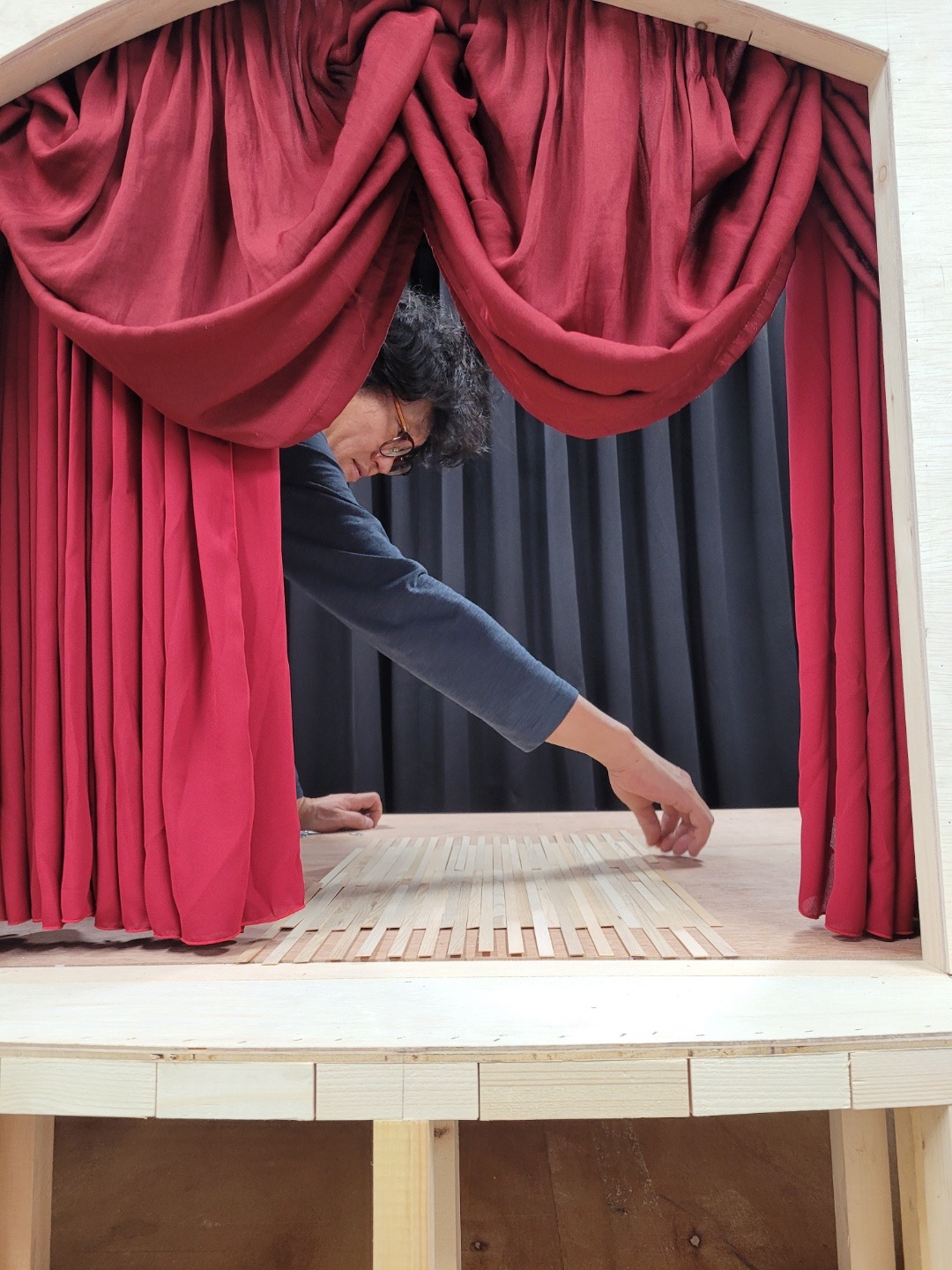
20260927극장에 대한 생각 / Thoughts on the Theater 극장은 무대와 공연자 그리고 관객으로 이루어져 있다고들 한다. 나의 무대에 대한 관심은 ‘로케이션'(2006년) 사진 연작 때부터였다. 나는 엘비스 프레슬리의 곡 ‘아유 론 섬 투나잇’의 가사에서 “누군가 말하길 세상은 무대고 우리는 각자 역할을 연기하지….” 라는 대목을 좋아한다. 무대 경험을 위해 2008년 연출가 수르야와 함께 대학로 소극장에서 연극 “몬스터”의 무대미술을 맡아 보기도 했다. 이듬해 2009년에는 “씨네메지션” 공연을 CREAM 페스티벌의 일환으로 요코하마 미술관에서, 이어서 뉴욕 ‘퍼포마09’의 초대로 아시아 센터에서 공연했다. ‘씨네메지션’에서는 마술사가 무대 위를 시종일관 다니며 바꾸어 놓는 소도구들의 모습이 무대 앞 카메라에서 비친 스크린 화면에서는 전혀 다른 풍경을 자아내는 구성의 공연이다. 극장은 무대 위에서 객석이 있는 한쪽 방향으로만 정교하게 보이는 세트, 조명, 연기자와 연출, 그리고 이를 반대 방향에서 바라보는 관객들의 즉각적 반응이 합쳐지는 공간이다. 현대 미술이 미술관에서 보일 때와는 달리, 무대와 객석이라는 구조 속에서 관객과 가지는 ‘즉석 만남’은 다른 층위의 소통을 가능하게 한다. 예술가로서 무대 위에서 관객의 반응을 예측하는 행위는 여러 해석과 의미의 층위 중 가장 윗부분에 있으며, 반복 재생이 불가능한 찰나를 다루는 매력을 가진다. 휘발성이 대단히 강하지만 동시에 자극적이다. DMZ 극장(2021)에서는 전시장 여기저기에 놓인 여러 개의 작은 팔레트들을 무대로 삼아 배우와 관객들이 함께 공간을 돌아다니며 공연하는 실험을 했다. 제주도 한경면 산양리의 옛 초등학교 교실에서 지역 주민들을 모시고 공연했던 ‘백 년 여행이 프롤로그'(2022)에서는 무대의 크기를 미니어처 크기로 줄였다. 그 결과 혼자서도 무대의 모든 구성 요소들을 하나씩 만져 가며 구성할 수 있었다. 작은 도르래에 와이어를 걸어 수동으로 오르내리는 바턴, 컨트롤러로 디밍이 되는 미니어처 무대조명과 배경 막, 세트, 작은 무대마루 위를 손가락으로 걸어 다니며 의인화된 배우의 손연기 등, 모든 요소를 혼자 다듬을 수 있는 규모로 하나씩 만들어 보았다. 고려극장을 방문하면서 나는 그동안 가지고 있던 극장에 대한 애착이 이를 구성하고 있는 요소 하나하나에 있었다는 사실을 새삼 깨닫게 되었다. 그리고 다국어 공연 자막을 위해 설치한 좌우 대형 모니터 패널은 나에게 고려극장만의 특수한 상황을 잘 드러내는 상징이라고 생각했다. It is often said that a theater consists of a stage, performers, and an audience. My interest in the stage dates back to my photographic series “Location” (2006). I particularly like the line from Elvis Presley’s song “Are You Lonely Tonight?” that goes, “Someone said the world is a stage, and we each must play our parts…” To gain stage experience, I worked as the set designer for the play *Monster* at a small theater in Daehak-ro in 2008, collaborating with director Surya. The following year, in 2009, I presented the performance *Cinemagician* at the Yokohama Museum of Art as part of the CREAM Festival, and subsequently performed at the Asia Center in New York at the invitation of *Performa ’09*. “Cinemagician” is a performance in which a magician moves continuously across the stage, transforming props that, when captured by a camera at the front of the stage and projected onto a screen, create an entirely different landscape. The theater is a space where the meticulously crafted set, lighting, actors, and direction—all visible only from the audience’s perspective—combine with the immediate reactions of the audience viewing from the opposite direction. Unlike when contemporary art is displayed in a museum, the “spontaneous encounter” with the audience within the structure of the stage and audience seating enables a different level of communication. As an artist, the act of anticipating the audience’s reaction on stage sits at the very top of the layers of interpretation and meaning, and holds the allure of dealing with a fleeting moment that cannot be repeated. It is highly ephemeral yet simultaneously stimulating. In *DMZ Theater* (2021), I conducted an experiment in which actors and audience members moved around the space together, using several small pallets placed throughout the exhibition hall as a stage. In * * One Hundred-Years of Travels – Prologue* (2022), performed for local residents in a former elementary school classroom in Sanyang-ri, Hankyeong-myeon, Jeju Island, I scaled the stage down to miniature size. As a result, I was able to assemble every element of the stage one by one on my own. I crafted each component individually on a scale that allowed me to refine everything myself: a baton that rises and falls manually via a wire attached to a small pulley; miniature stage lights and backdrops that dimmed via a controller; the set; and the hand gestures of an anthropomorphized actor walking across the small stage floor with fingers. Visiting the Goryeo Theater, I realized anew that my long-held affection for the theater stemmed from each and every element that made it up. Furthermore, I came to see the large monitor panels installed on either side for multilingual performance subtitles as a symbol that perfectly captured the unique circumstances of the Goryeo Theater.
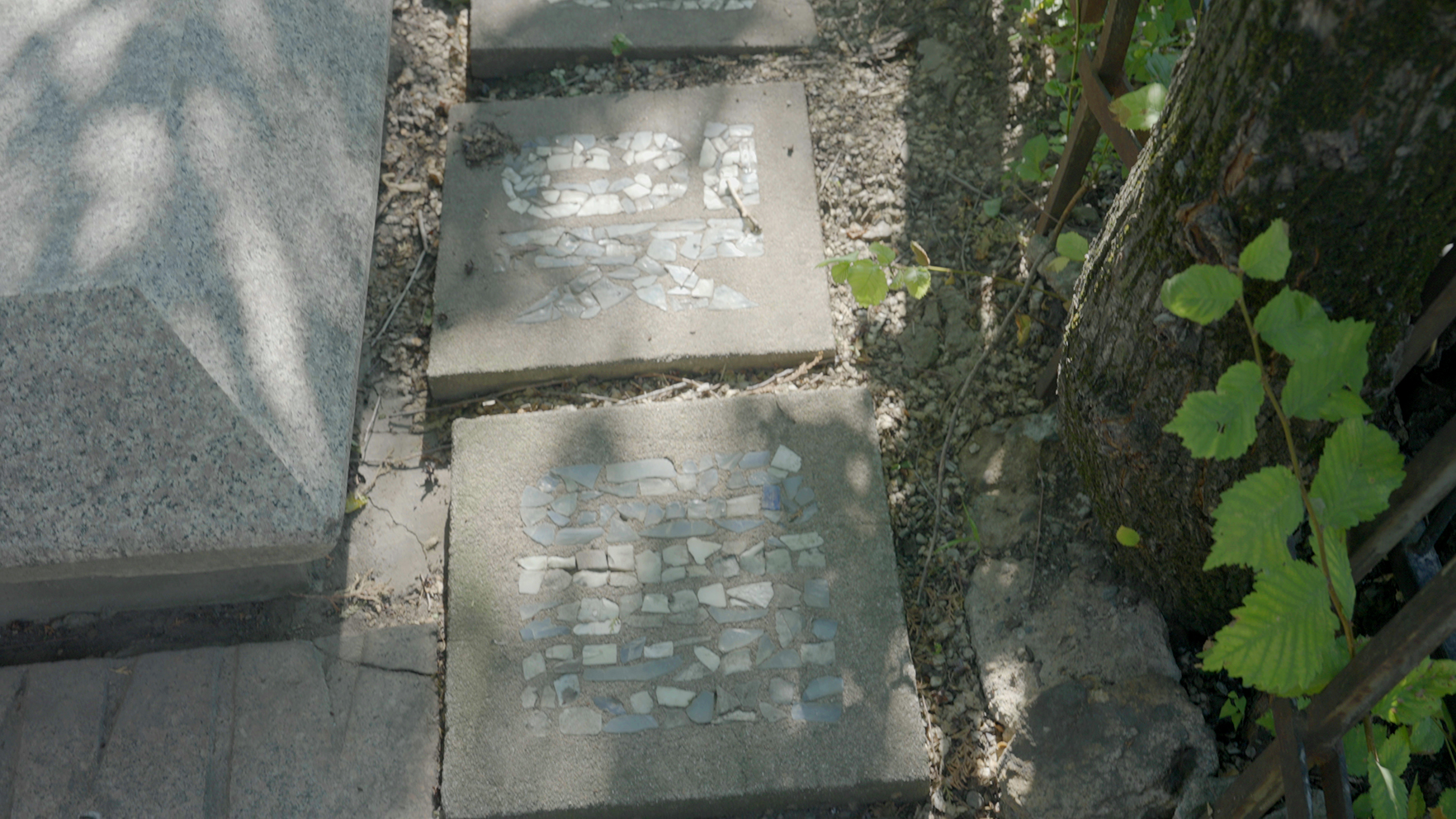
20260620이도령 전문 배우 김진의 대사 / Kim Jin’s Lines as Lee Do-ryeong 알마티 시내 공동묘지에 있는 김진 배우의 묘지를 다녀왔다. 1962년 1대 춘향을 연기했던 이함덕 배우와 함께 카자흐스탄 공화국에서 예술가에게 부여하는 최고 영예인 ‘인민배우’ 칭호를 고려인 최초로 받은 분이다. 고려극장의 1대 이도령 역할을 맡은 ‘이도령 전문 배우’답게 그의 묘역에는 백색 타일로 한 글자씩 ‘춘향전’의 한 대사가 새겨져 있다. 이도령이 가족을 따라 한양으로 떠나기 전 마지막으로 춘향을 만나서 이별을 고하는 대목이다. 저승으로 떠나는 배우가 남길 수 있는 멋진 대사인 동시에 멀리 떠나온 이주자의 심정이 겹쳐 보인다. “내. 가. 가. 면. 아. 주. 가. 며. 아. 주. 간. 들. 잊. 을. 소. 냐” I visited the grave of actor Kim Jin at the public cemetery in downtown Almaty. Along with actor Lee Ham-deok, who played the first-ever Chunhyang in 1962, he was the first person of Korean descent to receive the title of “People’s Actor”—the highest honor bestowed upon artists in the Republic of Kazakhstan. True to his reputation as a “specialist in the role of Lee Do-ryeong”—having played the first-ever Lee Do-ryeong at the Koryo Theater—his grave is inscribed with a line from *The Tale of Chunhyang*, each character carved into a white tile. It is the scene where Lee Do-ryeong meets Chunhyang one last time to bid her farewell before leaving for Hanyang with his family. It is a beautiful line that an actor departing for the afterlife could leave behind, and it also seems to reflect the feelings of an immigrant who has traveled far from home. “If. I. go. away. Will. you. really. forget. me. after. I’ve. been. gone. for. so. long?”
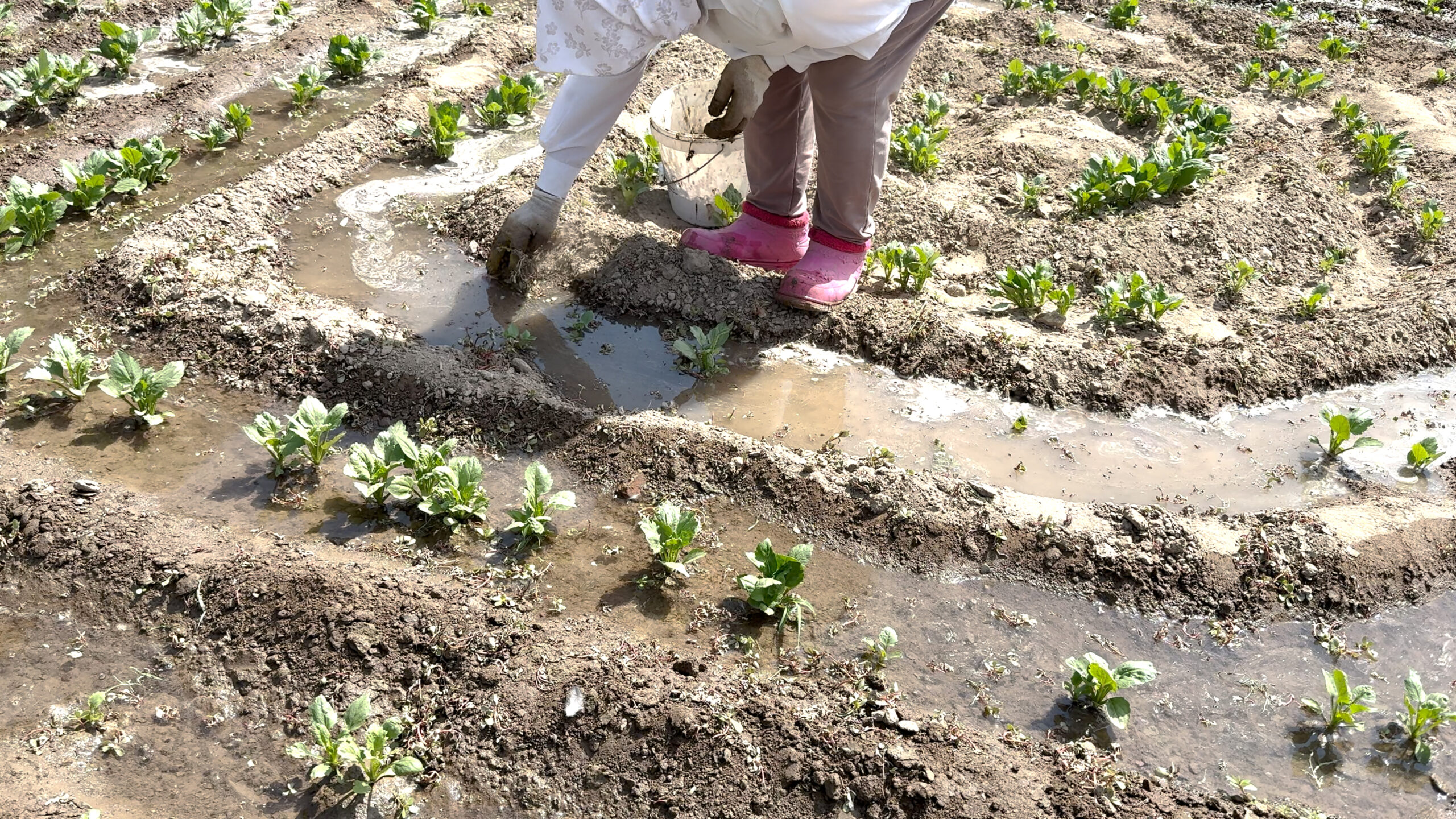
20260619우슈토베의 텃밭 /The Vegetable Garden in Ushtobe 건조하고 척박한 땅에서 식물을 키우는 방법. 적은 양의 물로도 식물이 자랄 수 있게 물이 새어 나가지 않도록 오랫동안 가둘 수 있는 형태는 나선형 모양이다. 보통 높게 흙을 쌓아 올린 이랑에 식물을 심고, 고랑을 두어 물 빠짐을 좋게 만들지만, 우슈토베는 반대로 고랑에 식물을 심고 이랑으로 물을 가둔다. 텃밭계의 대지예술 ‘로버트 스미스슨’. How to grow plants in dry, barren soil. A spiral shape is ideal for retaining water for long periods and preventing it from seeping away, allowing plants to grow even with minimal water. Typically, plants are planted in raised ridges of soil, with furrows created to improve drainage; however, in Ushtobe, the opposite is done: plants are planted in the furrows, and water is retained by the ridges. It’s like “Robert Smithson” meets vegetable gardening.
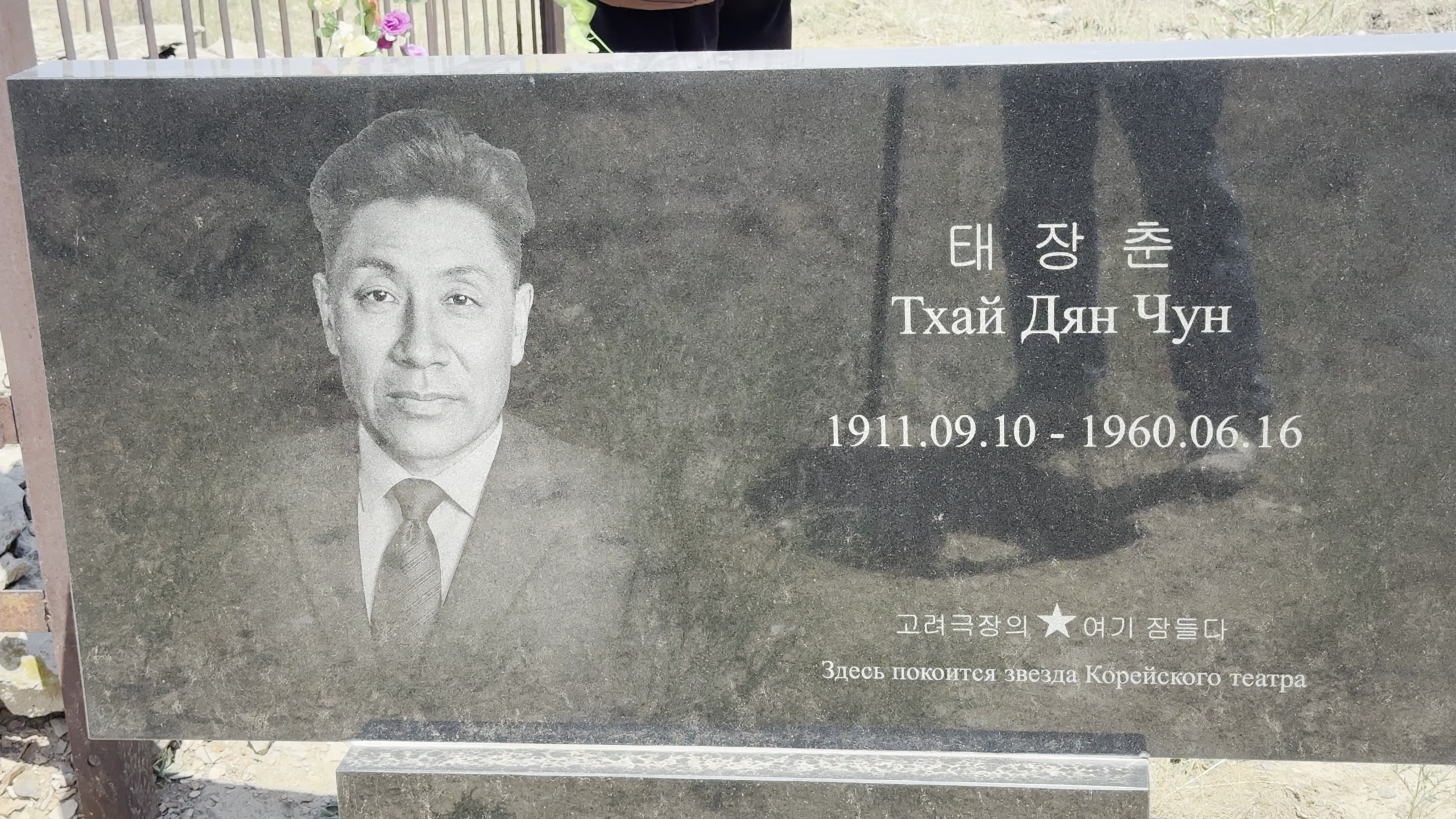
20260619종착역과 태장춘의 묘 / The Final Stop and Taejangchun’s Tomb 일부러 밤 기차를 타고 우슈토베로 향했다. 그곳은 강제 이주를 당한 고려인들이 실려 온 기차의 종착역이었다. 고려극장의 초기 배우이자 연출가였던 태장춘의 묘를 우연히 찾은 것은 뜻밖의 수확이었다. 1930년대 모스크바 영화대학에서 연기를 전공한 그는 초기 고려극장을 이끈 엘리트 예술인이었다. 그는 <밭두렁>(1934), <종들>(1937), <행복한 사람들>(1939), <의병들(홍범도)>(1942) 등을 연출하며, 중앙아시아로 이주한 직후 척박하고 낯선 땅에서 버텨내야 했던 사람들의 삶을 무대 위에 올렸다. 지난 2월 눈보라 때문에 일정을 미뤄 이번 6월에 다시 찾은 우슈토베는 신발 밑창이 끈적일 정도로 태양이 뜨거웠다. 살을 에던 겨울의 맹추위와 숨이 막히는 여름의 뙤약볕. 그 극단적인 계절의 한가운데서 이곳에 닿았을 사람들의 마음을 조용히 가늠해 본다. I deliberately took the night train to Ushtobe. That was the final stop for the trains that carried the Koryo-saram who had been forcibly relocated. Stumbling upon the grave of Tae Jang-chun, an early actor and director at the Koryo Theater, was an unexpected discovery. Having majored in acting at the Moscow Film Academy in the 1930s, he was an elite artist who led the Koryo Theater in its early days. Through his direction of films such as *The Field Ridge* (1934), *The Bells* (1937), *Happy People* (1939), and *The Righteous Army (Hong Beom-do)* (1942), he brought to the stage the lives of people who had to endure harsh and unfamiliar conditions in Central Asia immediately after their resettlement. Having postponed my trip to Ushtobe last February due to a snowstorm, I returned this June to find the sun so hot that the soles of my shoes felt sticky. The biting cold of winter cut through the flesh, and the suffocating summer heat. Standing in the midst of these extreme seasons, I try to imagine the feelings of those who arrived here.
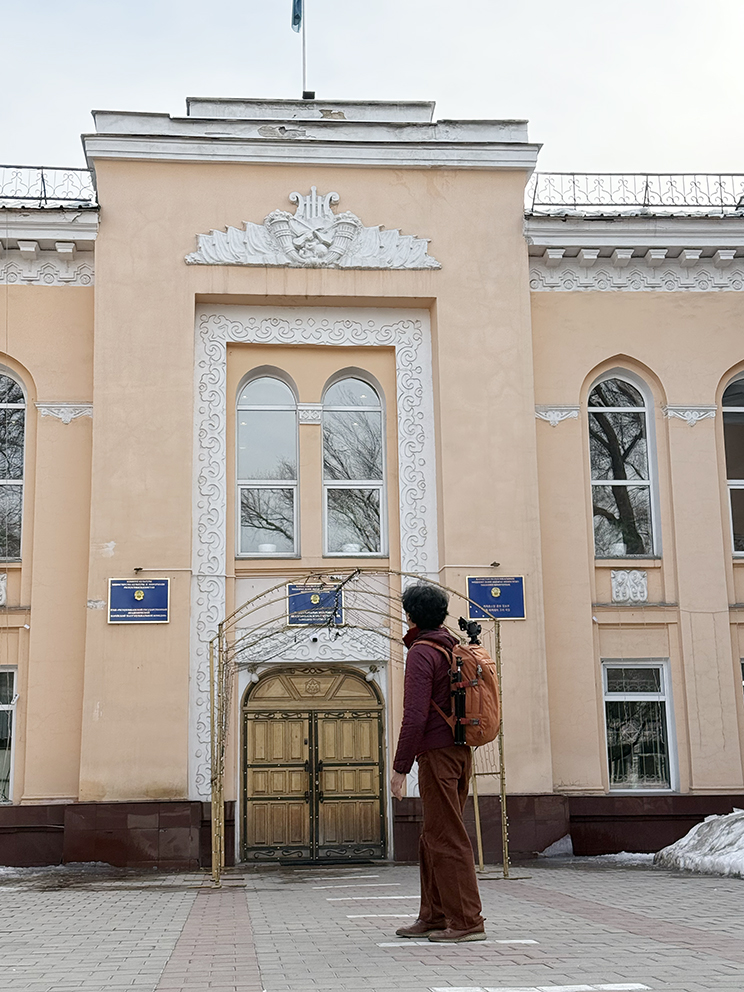
20260212첫 방문 / First Visit 알마티 고려극장에 처음으로 방문했다. ‘텐 라디온’ 부극장장님과 몇 차례 서신을 교환했던 터라 마음속으로는 여러 번 다녀온 듯 익숙했지만, 실제 방문은 이번이 처음이다. 극장 한편에 마련된 자료실에는 과거의 기록들이 전시되어 있었다. 과거 크즐오르다 고려극장에서 수위로 일하셨던 홍범도 장군의 소지품과 사진, 그리고 예전 공연 사진과 의상, 소품들을 볼 수 있었다. 나중에 알게 된 사실이지만, 텐 라디온 부극장장님의 어머니가 과거 고려극장에서 2대 춘향 역을 맡았던 배우 박 마이야였다고 한다. 이곳의 정식 명칭은 ‘카자흐스탄 공화국 국립 고려 뮤지컬 코미디 아카데미 극장’이다. 1932년 블라디보스토크에서 ‘원동변강조선극장’이라는 이름으로 시작되어, 크즐오르다와 우슈토베, 다시 크즐오르다를 거쳐 1968년 알마티로 이전하며 현재의 명칭으로 바뀌었다. 아침에 도착해 긴 시간을 대기한 끝에 극장장님을 만나 지하 자료실 열람을 요청했다. 하지만 외부인에게는 비공개 원칙이며, 한국 정부의 공식 공문이 있어야만 열람이 가능하다는 답변을 들었다. 먼 거리까지 찾아왔지만 자료를 열람하지 못하고 발길을 돌리게 되어 아쉬움이 남는다. I visited the Almaty Koryo Theater for the first time. Since I had exchanged several letters with Mr. Ten Radion, the deputy theater director, it felt as familiar as if I had been there many times before. In the archive room set up in one corner of the theater, historical records were on display. I was able to see personal belongings and photographs of General Hong Beom-do, who had once worked as a janitor at the Kzyl-Orda Korean Theater, as well as photographs of past performances, costumes, and props. I later learned that Deputy Theater Director Ten Radion’s mother was actress Park Maya, who had played the role of Chunhyang in the second production at the Korean Theater. The official name of this venue is the “National Goryeo Musical Comedy Academy Theater of the Republic of Kazakhstan.” It began in 1932 in Vladivostok under the name “Far Eastern Border Korean Theater,” and after moving through Kzyl-Orda and Ushtobe—and then back to Kzyl-Orda—it relocated to Almaty in 1968 and adopted its current name. I arrived in the morning and, after a long wait, we met with the theater director to request access to the underground archives. However, I was told that the archives are not open to the public and that access is granted only upon presentation of an official letter from the South Korean government. Although I had traveled a long distance to visit, I was unable to view the materials and had to turn back, leaving me with a sense of regret.
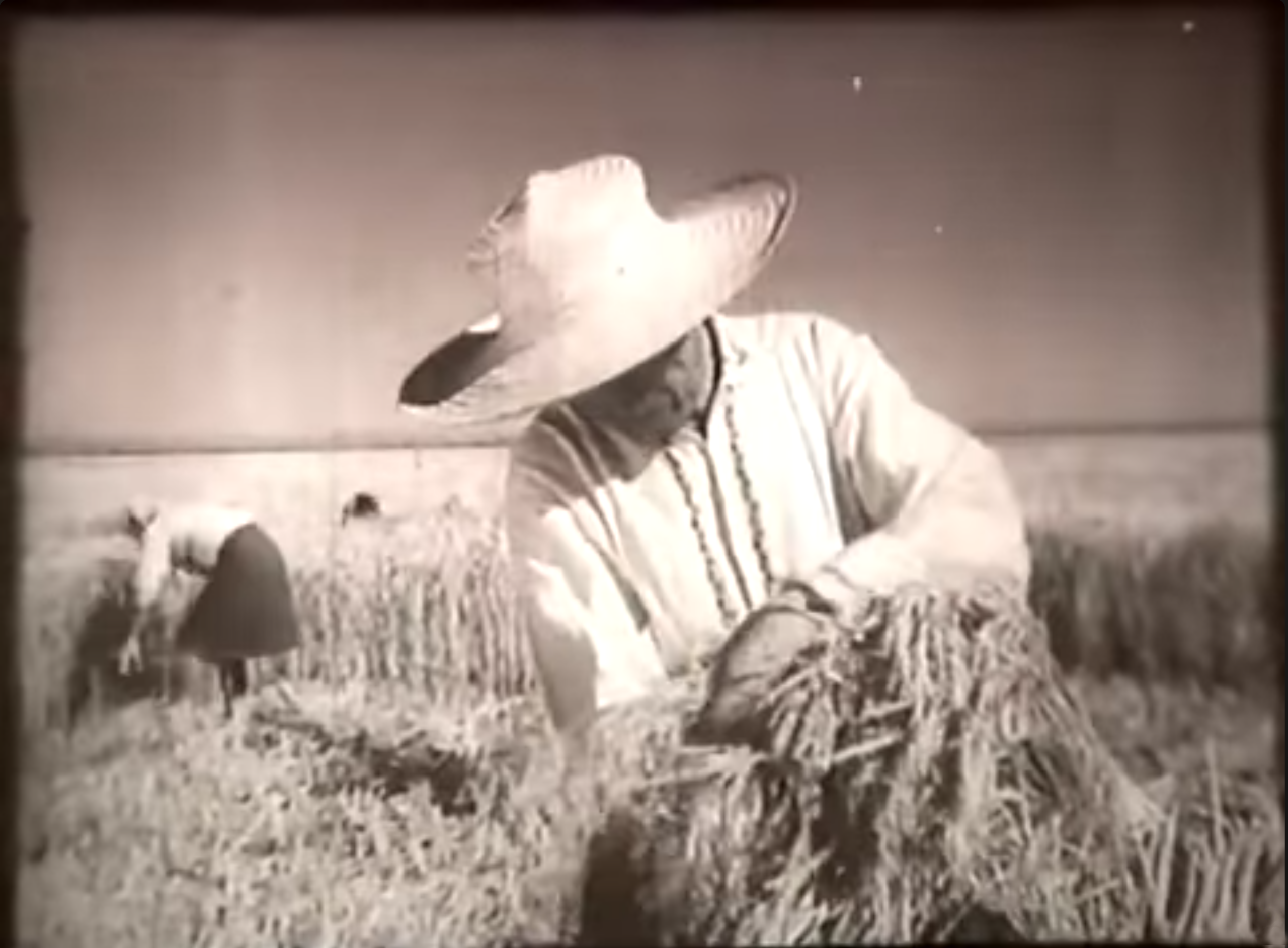
20260212황무지에 벼가 자라고 노래와 춤이 피어날 때 / When rice grows in the wasteland and songs and dances blossom 1945년 만들어진 소련의 홍보영화에는 카자흐스탄 북서부의 척박한 황야 지대인 크질로르다 지역에 정착한 고려인들의 첫 집단농장인 ‘아방가르드 콜호즈’가 등장한다. 러시아어로 ‘아방가르드(Avangard)’, 우리말로는 ‘선봉’이라는 이름처럼, 극한의 환경에서 농업의 최전선(선봉)을 개척하겠다는 의지가 담긴 이름이다. 당시 그곳은 소금기가 득실거리는 갈대밭과 모래땅이었지만. 그들은 맨손으로 수로를 파고 시르다리야강의 물을 끌어와 땅을 개간했다. 연해주 시절부터 갈고닦은 벼농사 기술을 발휘해서, 도저히 쌀이 자랄 수 없을 것 같던 중앙아시아의 황무지를 엄청난 규모의 곡창지대로 탈바꿈시켰다. 이 영화 속에는 사막에 물을 대기 위해 만든 수로의 모습과 물을 먹이는 소들, 벼를 수확하는 곡창지대, 그리고 농민들이 모여 씨름하는 모습이 나온다. 그리고 무엇보다 그들을 즐겁게 하기 위한 고려극장 단원들의 공연 모습이 담겨 있는 진귀한 장면들이 등장한다. A Soviet propaganda film made in 1945 features the “Avangard Kolkhoz,” the first collective farm established by Koreans who settled in the Kzyl-Orda region—a barren wilderness in northwestern Kazakhstan. Just as the name “Avangard” (Russian for “vanguard”) suggests, it embodies a tenacious determination to pioneer the forefront of agriculture in an extreme environment. Although the area was then nothing but salt-laden reed beds and sandy soil, they dug irrigation canals with their bare hands, channeled water from the Syr Darya River, and reclaimed the land. Applying the rice farming techniques they had honed since their days in Primorsky Krai, they transformed the barren wasteland of Central Asia—where rice seemed utterly impossible to grow—into a vast grain-producing region. This film features scenes of canals built to irrigate the desert, cattle drinking from the water, rice fields being harvested, and farmers gathering to wrestle. Above all, it includes rare footage of performances by members of the Goryeo Theater troupe, staged to entertain the farmers.